Custom Home vs. Whole-Home Renovation: Which Makes Sense for Your Boca Raton Property?
Articles
9 Min Read
Custom home construction and whole-home renovation are distinct paths with different cost structures, timelines, risks, and outcomes for Palm Beach County homeowners.
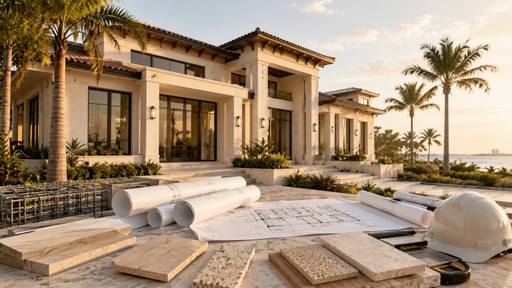
The decision to build a new custom home or to renovate an existing residence is one of the largest single decisions a Boca Raton, Delray Beach, Highland Beach, Gulf Stream, or Manalapan homeowner makes. The two paths look superficially similar — both deliver a finished luxury residence on a Palm Beach County lot — but they carry fundamentally different cost structures, timelines, risks, and outcomes.
There is no universally correct answer. The right path depends on six specific factors: lot value relative to structure value, structural and envelope condition of the existing residence, scope of change the homeowner wants, current code compliance gap, target timeline, and homeowner tolerance for renovation discovery costs. Steven Sellers Contracting has built and renovated luxury residences across Palm Beach County since 1994 — including projects that started as custom builds and projects that began as renovations and were converted mid-stream. This guide walks through the decision framework.
The two paths defined
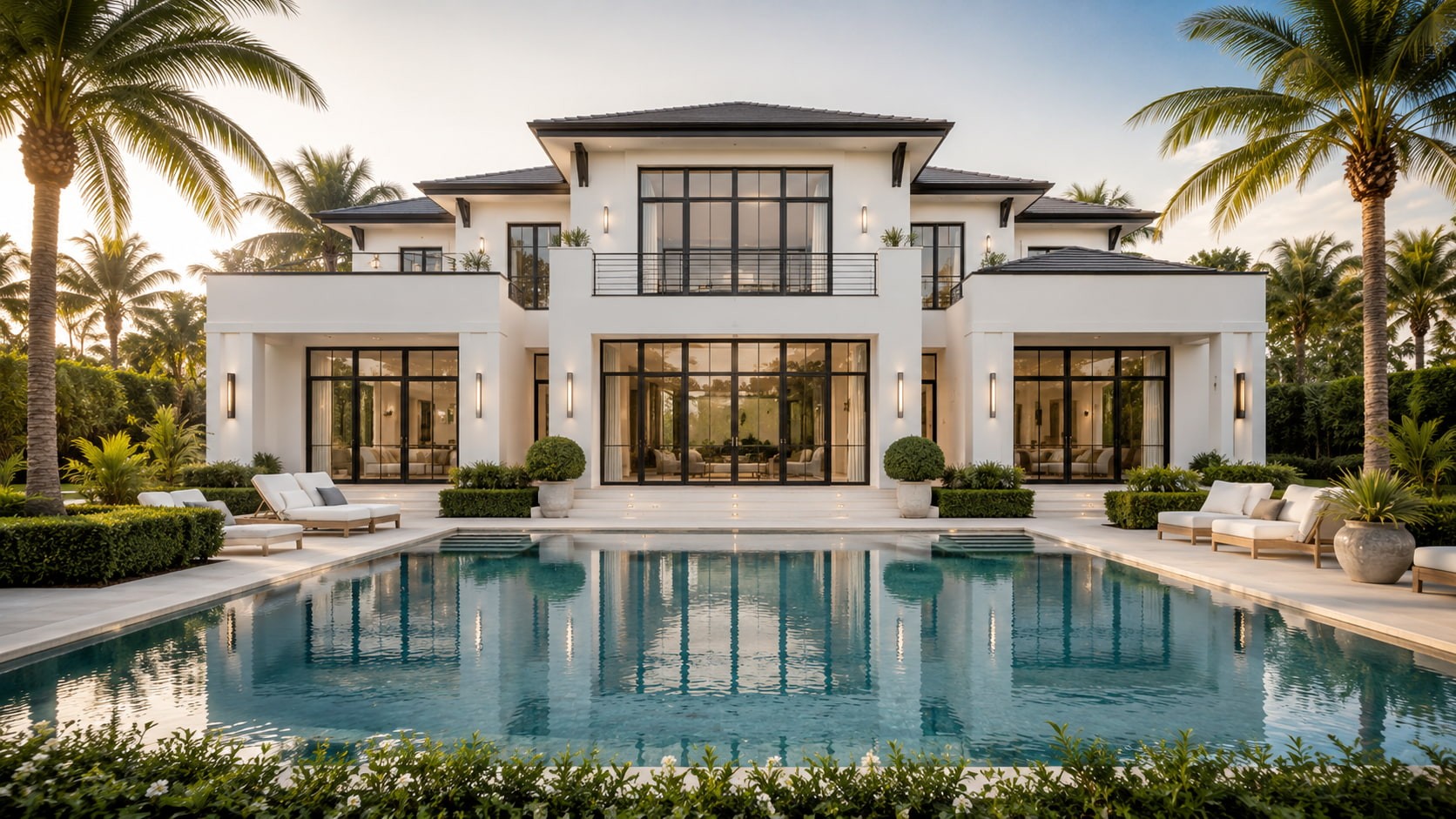
A custom home build is a ground-up new construction project. The existing structure (if any) is demolished. A new residence is designed and built on the lot from foundation up, engineered to current Florida Building Code 8th Edition standards, with full Wind-Borne Debris Region-compliant structural detailing, impact-rated openings, and modern systems infrastructure.
A whole-home renovation keeps the existing structure (foundation, exterior walls, often the roof structure) and rebuilds the interior — and often the envelope — within that shell. Whole-home renovations range from cosmetic refreshes to comprehensive gut renovations that retain only the foundation, framing, and roof deck. The result is a substantially modernized residence within the original structural footprint.
These are not opposite choices. There is a spectrum between them — selective renovation, addition + renovation, and partial demolition + rebuild all sit between cosmetic renovation and full custom build. But the binary "custom vs. renovation" is the starting decision frame for most Palm Beach County homeowners.
When custom home construction makes sense
Custom home construction is typically the right path when one or more of the following is true:
1. The lot value materially exceeds the existing structure value. When the lot is worth $3M and the existing residence is worth $1M, demolition and rebuild captures the lot's full value with a residence engineered to the homeowner's program. Renovating the existing $1M structure compromises the lot's potential.
2. The existing structure has significant structural, envelope, or systems deficiencies. Older Palm Beach County homes — particularly pre-1992 residences predating Hurricane Andrew code changes — often have structural and envelope detail that does not meet current Florida Building Code 8th Edition standards. Bringing those residences to current code can cost as much as new construction, without the program flexibility.
3. The homeowner wants a fundamentally different floor plan, ceiling heights, or architectural style than the existing structure supports. Renovation is constrained by the existing structural envelope. A homeowner who wants 12-foot ceilings in a residence with 8-foot ceilings cannot get there through renovation — the structure has to come down.
4. The existing residence is not Wind-Borne Debris Region-compliant and a full opening protection retrofit is required. Coastal residences east of US-1 in Palm Beach County must meet Wind-Borne Debris Region standards for any substantial renovation. If the existing windows, doors, and structural connector schedule do not meet current code, the renovation triggers full code-compliance work — which often makes new construction the more cost-efficient path.
5. The homeowner wants a current-code residence with full builder's workmanship warranty across every assembly. New construction delivers a residence with full Florida Building Code 8th Edition compliance throughout and a unified warranty across structural, envelope, MEP, and finish work. Renovations carry mixed-age warranty exposure.
6. The lot is in a CCCL, V-zone, or oceanfront location where the existing structure is non-compliant with current coastal construction standards. Bringing an existing Coastal Construction Control Line residence to current code is often more expensive and slower than building new.
When whole-home renovation makes sense
Whole-home renovation is typically the right path when one or more of the following is true:
1. The existing structure has architectural character that defines the residence's value. Old Floresta bungalows, Mediterranean Revival residences, Mizner-era homes, and mid-century coastal properties carry architectural value in the existing structure itself. Demolishing these residences destroys the asset that makes them valuable. Historic and architecturally significant residences are renovation candidates, not demolition candidates.
2. The lot is encumbered by setback, height, or floor area restrictions that the existing structure already exceeds (legal non-conforming). Many older Palm Beach County residences sit on lots where the existing structure is legal non-conforming — meaning the current structure exceeds modern setback or height requirements but is grandfathered. Demolition forfeits that grandfathering. A new residence on the same lot would have to comply with current restrictions, often resulting in a smaller envelope than what currently exists.
3. The existing structure is structurally sound and the homeowner's scope is interior-focused. Kitchen, bath, flooring, millwork, and finish renovations on a structurally sound residence are dramatically less expensive than new construction. If the structure works and the program issue is finishes and layout, renovation is the right path.
4. The homeowner wants to preserve specific architectural elements — original millwork, period detailing, original masonry — that cannot be replicated economically. Authentic historic detailing carries irreplaceable craft value. Renovation preserves that value.
5. Timeline pressure favors renovation. New construction in Palm Beach County typically takes 18–30 months from initial meeting to certificate of occupancy. Whole-home renovations can complete in 6–16 months depending on scope. For homeowners with timeline pressure, renovation moves faster.
6. The total renovation budget — including code-compliance work — comes in materially below the cost of equivalent new construction. When the math works, renovation is more cost-efficient. When the math doesn't work, custom build is more cost-efficient.
The six factors that drive the decision
In practice, the decision between custom and renovation comes down to six specific factors, evaluated together:
1. Lot value relative to existing structure value. When the lot dominates the value equation, new construction captures more value. When the structure has independent value (historic, architectural, or simply structurally sound and in good condition), renovation preserves that value.
2. Existing structural and envelope condition. A structural and envelope assessment by a Florida-licensed structural engineer is the foundational step. Hidden conditions — termite damage, foundation settlement, envelope waterproofing failure, structural inadequacy — can flip a renovation decision into a custom build decision once they are exposed.
3. Scope of change. Cosmetic and finish-focused scope favors renovation. Floor plan, ceiling height, structural envelope, and program-level changes favor new construction.
4. Code compliance gap. The further the existing residence sits from current Florida Building Code 8th Edition (especially Wind-Borne Debris Region standards), the closer the renovation cost moves toward new construction cost. When the gap is wide enough, new construction wins on cost basis.
5. Timeline. Renovations are typically faster than new builds. For homeowners with hard deadlines (children's school year, relocation timing, market conditions), timeline can be the deciding factor.
6. Tolerance for discovery costs. Renovations carry inherent discovery risk — termite damage, structural deficiencies, electrical or plumbing failures hidden in walls — that surface during demolition. Homeowners with low tolerance for budget variance often prefer new construction's predictability. Homeowners willing to absorb discovery costs in exchange for preserved structure can move forward with renovation.
The hybrid path — partial demolition and rebuild
Some Palm Beach County projects don't fit cleanly into either category. The most common hybrid pattern is:
Retain the existing foundation and a portion of the original structure (e.g., a wing with architectural character)
Demolish the remainder of the residence
Build new construction on the demolished portion, integrated structurally and architecturally with the retained section
This hybrid path requires careful pre-construction analysis of structural transitions, envelope integration, and code-compliance boundaries. It is more complex than either pure custom or pure renovation, but for certain lots and programs it is the right answer.
Steven Sellers Contracting executes both pure custom builds and hybrid demolition-plus-rebuild projects, with the path determined by the pre-construction analysis rather than imposed as a starting assumption.
How Steven Sellers Contracting approaches the decision
Steven Sellers Contracting frames the custom-vs-renovation decision as a pre-construction analytical exercise, not a sales conversation. Every prospective project begins with:
A site walk by Steven Sellers personally
An assessment of the existing structure (if any) for code compliance, structural condition, and envelope integrity
A scope-of-change framing with the homeowner — what is the program target, and how far is the existing structure from that target
A cost-engineered framework comparing the renovation cost path and the new-construction cost path against the homeowner's target
A timeline comparison between the two paths
A risk register for each path, including discovery risk on renovation and permit-cycle risk on new construction
The deliverable is a documented recommendation — custom, renovation, or hybrid — based on the six factors above. The recommendation is the homeowner's to accept or reject. The work is to give the homeowner a defensible analytical framework before either path is contracted.
Schedule a consultation
If you are evaluating a Palm Beach County property and trying to decide between custom home construction and whole-home renovation, Steven Sellers Contracting offers a complimentary initial consultation that includes a site walk, an existing-structure assessment, and a framing of both paths against your scope and budget target. Contact the firm directly at (561) 441-6557 to schedule. Every inquiry is reviewed personally by Steven Sellers.
Steven Sellers Contracting, Inc. — Florida Certified General Contractor, License CGC057260. Continuously operating in Palm Beach County since 1994. 116+ permitted projects. BBB Accredited. BuildZoom Top 5% — Florida.

About Author
Steven Sellers
Steven Sellers is the founder and principal of Steven Sellers Contracting, Inc., a Florida Certified General Contractor (License CGC057260) operating continuously in Boca Raton since 1994. The firm builds custom homes, spec residences, and whole-home renovations across Palm Beach County's coastal luxury market — including Boca Raton, Delray Beach, Highland Beach, Gulf Stream, and Manalapan. With over 116 permitted projects in Palm Beach County and a BuildZoom ranking in the top 5% of Florida's 191,000+ licensed contractors, Steven personally directs every project from foundation through final certificate of occupancy under a single-principal operating model.
Similar Topic